
Installing security cameras is easy. Putting them in the right place is what really keeps your home safe.
Homeowners spend money on good cameras but still miss the spots where someone could get in. That’s why knowing the best places to install security cameras in Scarborough homes is just as important as choosing the right system. Every home is different, and the best security camera placement in Scarborough depends on your home’s layout, entry points and outdoor space.
In this guide, you’ll learn exactly where to place your cameras, which areas people always forget and how to cover your home without leaving blind spots. You might be surprised by the one place that many Scarborough homeowners miss.
Why Scarborough Homes Have Different Security Needs Than the Rest of Toronto
Not every home in Toronto needs the same security camera placement and Scarborough is a good example. The area has a mix of detached houses, semi-detached homes, older bungalows, townhouses and homes with separate basement entrances. Because of these different layouts, the best places to install security cameras in Scarborough homes can be very different from homes in other parts of the city.
Scarborough properties also have long driveways, side walkways, large backyards and more than one entrance. If these areas are not covered, they can become blind spots that are easy to miss. A good home security camera placement plan should protect every main entry point instead of focusing only on the front door.
Weather is another thing to think about. Heavy snow, rain and freezing temperatures can affect how well outdoor cameras work. Choosing the right outdoor security camera placement, mounting height and camera angle helps keep your system working clearly all year.
A well-planned security camera installation in Scarborough gives you better coverage, fewer blind spots and more reliable video when it matters most.
The Most Targeted Entry Points in Scarborough Break-Ins (TPS Data)
Most home break-ins don’t happen through locked walls or roofs. They happen through easy-to-reach entry points. According to Toronto Police Service (TPS) break and enter data, thieves always look for doors and windows that are hidden from view or left without security coverage.
The first places you should protect are:
- Front door – The main entrance is still one of the most common places for unwanted visitors and package theft.
- Back door – Rear entrances are often hidden by fences, trees or backyards, making them easier to target.
- Side door – Many homes have narrow side walkways that cannot be seen from the street.
- Basement entrance – Separate basement doors are common in Scarborough and can be an easy target if they are not monitored.
- Ground-floor windows – Windows that are unlocked, hidden by shrubs, or located at the side or back of the home can give intruders quick access.
Knowing these high-risk areas makes it easier to plan the best places to install security cameras in Scarborough homes. Instead of placing cameras where they look good, focus on the entry points someone is most likely to use. Good home security camera placement helps remove blind spots, captures clear video and gives you better protection if someone tries to enter your property.
Front Door & Porch: Your #1 Camera Location in Any Scarborough Home
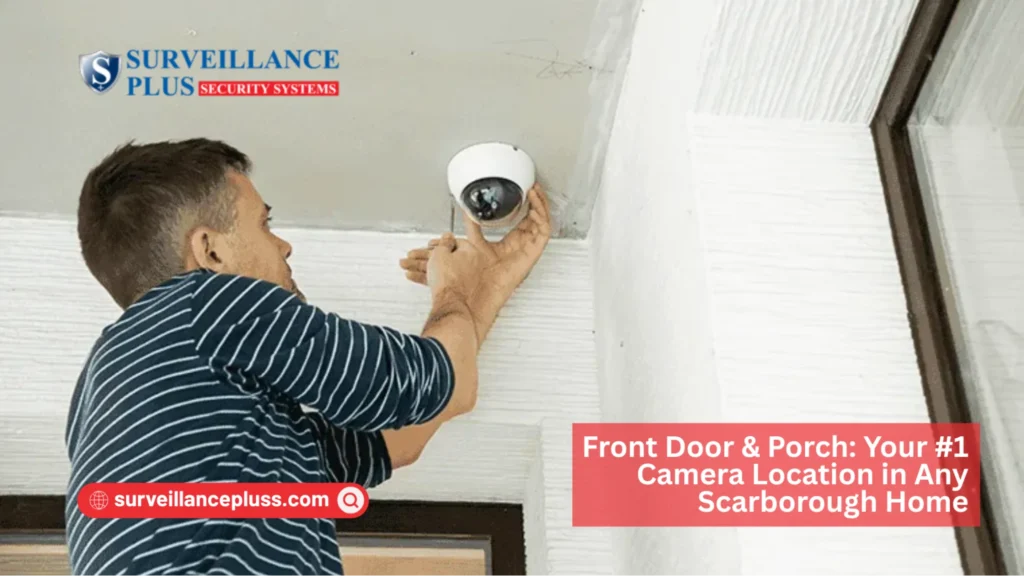
The front door is where almost everyone enters your property, making it one of the first places to protect. A well-planned front door security camera helps record visitors, delivery drivers and anyone who walks up to your entrance. It also reduces the risk of package theft and gives you a clear record of activity around your home.
For the best security camera placement, install the camera above or beside the front door with a clear view of the porch, steps, and front walkway. The right camera angle should capture faces without pointing directly into bright sunlight or porch lights, which can affect night vision and video quality.
A video doorbell is a great option for smaller entrances, while a wide-angle outdoor security camera works better for homes with larger front yards or longer pathways. Features like motion detection, mobile alerts and two-way audio let you see who’s outside even when you’re not home.
If your property has a gate, long driveway, or more than one path leading to the entrance, consider adding another camera to improve security coverage and remove blind spots. A small adjustment in camera position can make a big difference when you need clear video of someone approaching your front entrance.
Backyard & Rear Fence Line: Covering the Easiest Access Route for Intruders
The backyard is always one of the quietest parts of a property, which is why it should never be left without camera coverage. High fences, trees, and sheds can block the view from neighbours and the street, giving someone more time to move around without being seen.
For effective outdoor security camera placement, install a camera where it can watch the backyard, rear door, patio and any gate in the fence. If your property backs onto a park, laneway, or green space, make sure the camera also covers the rear fence line. This helps you see anyone entering your yard before they reach your home.
Choose a weatherproof camera with motion detection and night vision so it can record clear video in rain, snow or low light. Keep bushes and tree branches trimmed so they don’t block the lens or create blind spots during the summer.
If your backyard is large, one camera may not provide full security coverage. Adding a second camera at a different angle can cover hidden corners, storage sheds or detached garages. Good camera placement around the rear of your home makes it much harder for someone to approach unnoticed and gives you a clearer view of everything happening outside.
Garage & Carport Coverage: Protecting Vehicles From Scarborough’s Rising Auto Theft
Garage and driveway cameras have become more important as vehicle theft continues to be a concern in Scarborough and across the GTA. A camera in the right location can help record suspicious activity, capture vehicle details and alert you when someone enters your driveway.
For reliable garage security camera placement, install an outdoor security camera above the garage door or on the front corner of the house. It should cover the driveway, parked vehicles, and anyone walking toward the garage or carport. If you have a detached garage, place another camera at the entrance so you can monitor both the door and the path leading to it.
Choose a camera with motion detection, night vision, and high-resolution video so you can clearly record faces and license plates, even after dark. If your driveway is long, adjust the camera angle to cover the full length without leaving blind spots.
Don’t forget to protect the side or rear garage door if there is one. These entrances often receive less attention but can still be used to access tools, bicycles or even your home. A well-planned security camera installation around your garage and driveway gives you better property surveillance, stronger evidence if a crime happens and greater peace of mind every day.
Best Indoor Camera Locations for Scarborough Homes
Outdoor cameras help protect the outside of your home, but indoor security camera placement adds another layer of protection. If someone gets inside, indoor cameras can record where they go, help identify them, and protect your family and valuables. Focus on shared areas instead of private spaces like bedrooms or bathrooms.
Main Hallway
A hallway camera can see people moving between rooms after they enter your home. It works well in detached homes, bungalows, and townhouses where several rooms connect to one main hallway. Place the camera high on the wall to get a wider view without blocking the walkway.
Staircase
If your home has more than one floor, a camera facing the stairs helps track movement between levels. It also works well for homes with finished basements or separate basement suites. A clear view of the staircase gives you better indoor surveillance without needing cameras in every room.
Living Room
The living room often contains TVs, computers, and other valuable items. A camera placed in a corner can cover the main seating area and nearby entryways. Choose a wide-angle camera with motion detection so it records activity only when someone enters the room.
Basement Landing
Many Scarborough homes have a separate basement entrance. Installing a camera near the basement landing helps monitor anyone coming upstairs and provides another layer of home security if the lower level is rented or used by guests.
Home Office
If you work from home or keep expensive electronics and important documents in one room, a camera can help protect them. Position it to cover the entrance rather than pointing directly at your desk. This gives you useful video recording while keeping your workspace comfortable and private.
Ontario Privacy Rules: What Your Cameras Can and Cannot Record in Scarborough
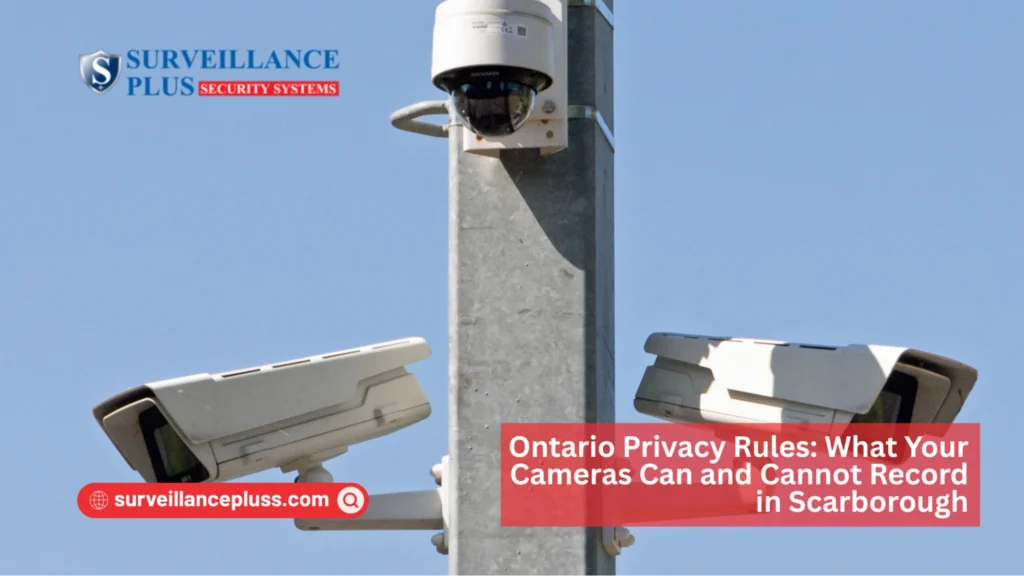
Installing security cameras on your property is legal in Ontario, but they should be used to protect your home, not to invade someone else’s privacy. A good security camera installation should focus on your own entrances, driveway, garage, backyard and other areas that belong to you.
You Can Record Your Own Property
You can place outdoor security cameras to monitor your front door, driveway, porch, backyard, garage and other parts of your property. It’s also normal if your camera captures a small part of a public sidewalk or street while recording your entrance, as long as your main focus is your own home.
Avoid Recording Your Neighbour’s Private Property
Try not to point cameras directly at your neighbour’s windows, backyard, deck or private living areas. Adjust the camera angle so it covers your property without recording more than necessary. This helps avoid privacy concerns and keeps your home surveillance system focused on security.
Be Careful With Audio Recording
Many modern cameras include built-in microphones. Recording conversations without permission can create legal issues in some situations. If you don’t need audio, consider turning it off and rely on clear video recording and motion alerts instead.
Use Cameras Responsibly
The goal of any home security system is to improve safety, not to watch people unnecessarily. Review your camera views after installation to make sure they cover the right areas and don’t create privacy concerns. A properly planned system protects your home, respects your neighbours, and gives you reliable evidence if an incident happens.
Frequently Asked Questions About Camera Placement in Scarborough
-
Where should I install security cameras around my house?
The best places are the front door, driveway, backyard, garage, side entrance, and basement entrance. These are the areas where people enter or move around your property. Inside your home, a hallway or staircase camera can add another layer of protection without covering private rooms.
-
How many security cameras does a typical Scarborough home need?
Most homes need 4 to 8 security cameras, depending on their size and layout. A smaller townhouse may only need four cameras, while a detached home with a garage, backyard and basement entrance may need six to eight cameras for complete coverage.
-
What is the best height to install outdoor security cameras?
Outdoor security cameras should usually be mounted about 8 to 10 feet above the ground. This height helps capture clear faces while making the camera harder to reach. It also provides a wider view of driveways, entrances, and other important areas around your home.
-
Can security cameras record the street or my neighbour’s property in Ontario?
Your cameras should mainly record your own property. It is normal if a small part of the street is visible while covering your entrance or driveway. However, avoid pointing cameras directly at your neighbour’s windows, backyard, or other private areas.
-
Are indoor security cameras worth installing?
Yes. Indoor cameras help record movement if someone gets inside your home. Good locations include hallways, staircases, living rooms and basement landings. Avoid placing cameras in bedrooms or bathrooms to protect your family’s privacy while keeping your home secure.
