
You don’t think much about your security cameras until the day you really need them. Maybe a package goes missing, someone walks onto your driveway at night or you want to check on your home while you are away. That’s when you realize not every security camera system works the same.
If you’re looking for the best NVR & DVR security camera systems for Toronto homes, choosing the right one can feel confusing. There are so many brands, features, and prices that it’s easy to spend more than you need or end up with a system that doesn’t fit your home.
That’s why we put together this simple 2026 buyer’s guide. We’ll show you the real difference between NVR and DVR systems, which one works best for Toronto homes, what they cost and what to look for before you buy. A few minutes of reading now could save you years of frustration later.
What Is an NVR and DVR? (And Why It Matters for Toronto Homeowners)
If you’re shopping for the best NVR & DVR security camera systems for homes, the first thing to understand is what these two systems actually do. Both record video from your security cameras but they work in different ways. Choosing the right one can affect video quality, future upgrades, installation costs and how easy your system is to use.
What Is an NVR?
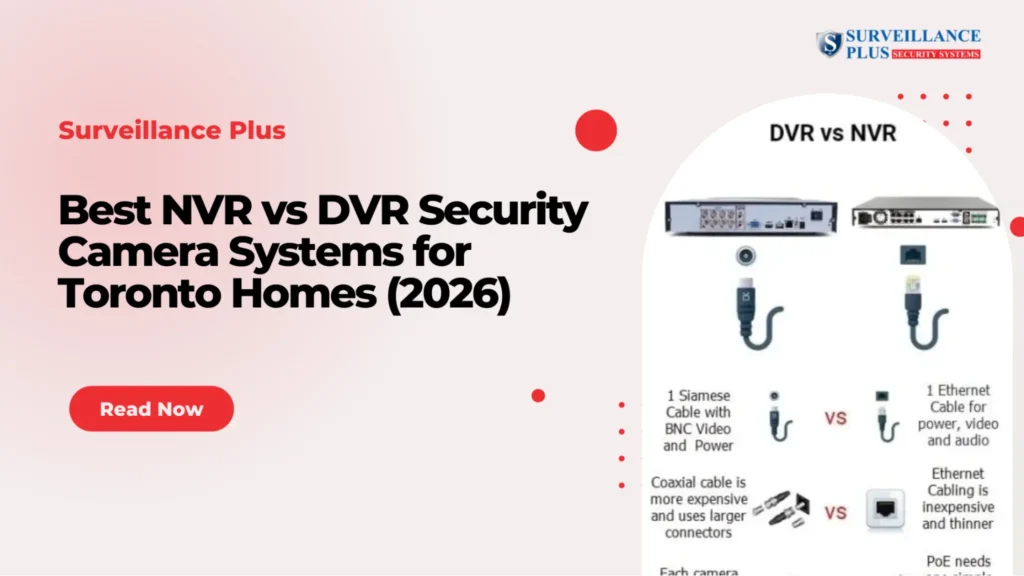
An NVR (Network Video Recorder) works with IP security cameras. Each camera sends video through your home network, usually with a single Ethernet cable using PoE (Power over Ethernet). Since the video is processed inside the camera before it reaches the recorder, NVR systems always give you sharper video, smart features like person or vehicle detection and better remote viewing.
What Is a DVR?
A DVR (Digital Video Recorder) works with analog security cameras. The cameras send video to the recorder through coaxial cables and the DVR processes and stores the footage. Homeowners choose a DVR when replacing an older CCTV system because it lets them keep much of the existing wiring, which can help lower installation costs.
While DVR systems may not offer every smart feature found in newer NVR systems, they still provide reliable recording and are a good option for many homes.
Why Does This Matter for Toronto Homeowners?
Not every home needs the same type of security camera system. A newer house with modern wiring may be a better fit for an NVR system, while an older Toronto home with existing coaxial cables may benefit from a DVR upgrade.
Your choice also affects video quality, storage, future upgrades, and even how well your cameras perform over the years. Taking a few minutes to understand the difference now can help you choose a system that fits your home, your budget, and your long-term security needs.
NVR vs DVR: Key Differences Explained Simply
If you are trying to decide between an NVR vs DVR system, you’re not alone. At first, they may look almost the same because both record video from your security cameras. The real difference is how they connect, the features they offer and how well they’ll meet your needs over time.
| Feature | NVR System | DVR System |
| Camera Type | IP cameras | Analog cameras |
| Video Quality | Up to 4K and higher | Usually 1080p or 4K with supported cameras |
| Cabling | Single Ethernet (PoE) cable | Coaxial cable plus power cable |
| Smart Features | Person, vehicle, and motion detection | Basic motion detection on most systems |
| Installation | Cleaner cable setup | Works well with existing coaxial wiring |
| Future Upgrades | Easy to expand | More limited expansion |
Video Quality
An NVR system normally delivers sharper images because IP cameras record in higher resolutions. If you want to zoom in on faces, licence plates or small details, the extra image quality can make a real difference.
Installation
A DVR system can be a good option if your home already has coaxial wiring from an older CCTV system. For new installations, PoE cameras connected to an NVR usually need fewer cables, making the installation cleaner and easier to manage.
Best NVR Systems for Toronto Homes in 2026
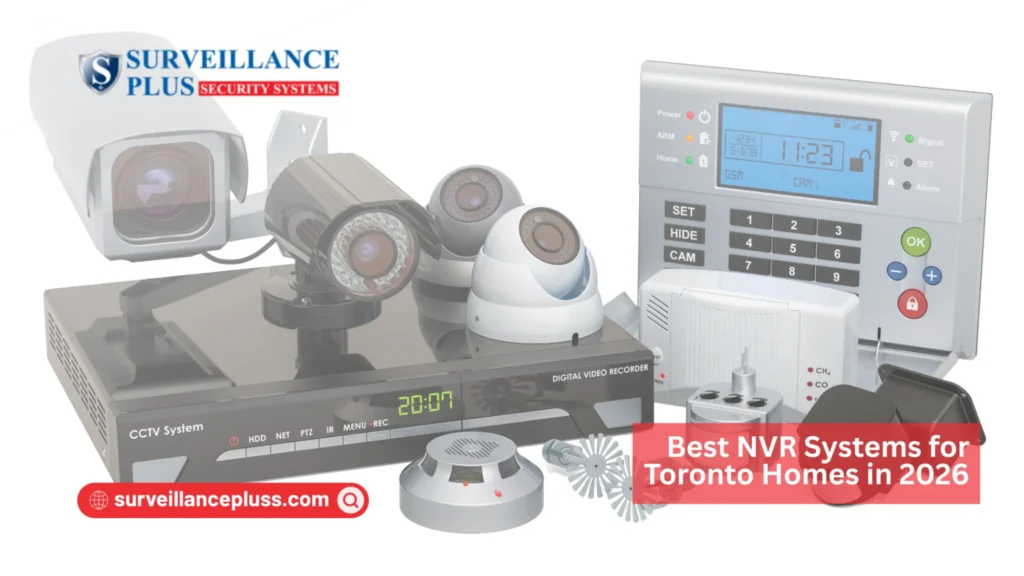
If you’re buying a new NVR security camera system, choose one that gives clear video, reliable recording and room to grow. Toronto homeowners also need a system that can handle cold winters, support remote viewing and work well for years without constant updates.
Here are some of the best NVR systems available in Canada in 2026.
Hikvision NVR Systems
Hikvision is a trusted choice for homeowners who want excellent image quality and dependable performance. Many models support 4K recording, AI person and vehicle detection and large storage capacity. They work well for detached homes and larger properties where complete coverage is important.
Dahua NVR Systems
Dahua offers a good balance of performance and price. Their NVR systems include smart motion detection, colour night vision on supported cameras and an easy-to-use mobile app. They are a solid choice for families looking for reliable home security without paying for features they may never use.
Lorex NVR Systems
Lorex is one of the most popular brands in Canada because it is easy to use and widely available. Most systems include 4K cameras, local video storage and remote viewing through a smartphone app. They are a good fit for homeowners who want a simple system with no monthly subscription fees.
Uniview NVR Systems
Uniview is becoming more popular with professional installers because of its stable performance and clear video quality. It supports advanced AI features, good night vision and flexible storage options. It works well for homeowners planning to expand their security system over time.
Which NVR System Is Right for Your Home?
The best choice depends on your home, your budget, and the level of protection you need.
| Home Type | Recommended NVR Brand |
| Condo or Apartment | Lorex |
| Townhouse | Dahua |
| Detached Home | Hikvision |
| Large Property | Hikvision or Uniview |
| Home with Future Expansion | Uniview |
No matter which brand you choose, proper installation is just as important as the equipment itself. A high-quality NVR with poorly placed cameras can leave blind spots and miss important activity. Choosing the right cameras, recorder, and camera locations together will give you much better protection.
Best DVR Systems for Toronto Homes in 2026
A DVR security camera system is still a smart choice for Toronto homeowners. If your home already has analog security cameras or coaxial cable wiring, upgrading to a new DVR can improve your security without replacing your entire setup. It is always a practical way to save money while getting better recording quality and newer features.
Hikvision DVR Systems
Hikvision offers dependable DVR systems that support HD and 4K recording with compatible cameras. Many models include smart search, motion detection and remote viewing through a mobile app. They are a great option for homeowners upgrading an older CCTV system.
Dahua DVR Systems
Dahua DVRs are known for stable performance and simple operation. They support long recording times, clear playback and good image quality. If you want a reliable system for everyday home security, Dahua is a solid choice.
Lorex DVR Systems
Lorex continues to be a trusted name in Canada. Their DVR systems are easy to set up, offer local video storage and work well with their HD analog cameras. They are a good fit for families looking for a simple system without monthly cloud storage fees.
Swann DVR Systems
Swann DVR systems are popular for small homes because they are easy to use and widely available. Packages include cameras, a recorder, and everything needed for a basic home security setup.
Which DVR System Should You Choose?
The right DVR depends on your current equipment and future plans.
| Your Situation | Recommended DVR Brand |
| Replacing an older CCTV system | Hikvision |
| Best value for money | Dahua |
| Easy-to-use home system | Lorex |
| Small home or starter system | Swann |
If you’re starting from scratch with a brand-new security camera system, an NVR is usually the better long-term option. But if your existing analog cameras are still in good condition, upgrading to a modern DVR can be a cost-effective way to improve your home’s security without replacing all the wiring.
How Many Cameras Do You Need? (By Toronto Home Type)
One of the biggest mistakes homeowners make is buying too few cameras. A single camera at the front door won’t protect the rest of your property. At the same time, adding cameras in every corner can increase costs without giving you much extra value.
The right number of security cameras depends on your home’s size, layout and the areas you want to monitor.
| Home Type | Recommended Cameras | Main Areas to Cover |
| Condo or Apartment | 2 to 3 | Front door, balcony or patio, main living area |
| Townhouse | 4 to 6 | Front door, backyard, garage, driveway |
| Semi-Detached Home | 5 to 7 | Front entrance, driveway, backyard, side entrance |
| Detached Home | 6 to 8 | Front yard, driveway, garage, backyard, side gates, main entry |
| Large Property | 8 or more | All entry points, outdoor spaces, detached garage, sheds and other buildings |
Cover Every Entry Point First
Start by protecting the places where someone could enter your home. The front door, back door, garage, basement entrance, and ground-floor windows are usually the highest priorities. Once those areas are covered, you can add cameras for your driveway, backyard or other outdoor spaces.
Think About Blind Spots
Walk around your property during the day and at night. Look for places that are hidden from the street or blocked by fences, trees, or walls. These areas are often missed during planning but can become easy access points if they are left uncovered.
Plan for the Future
Even if you don’t need extra cameras today, it helps to choose a recorder that supports future expansion. Many homeowners add cameras later after finishing a basement, building a backyard office, or upgrading outdoor spaces. Having extra camera channels available now can save both time and money later.
The goal isn’t to install the most cameras. It’s to place the right cameras in the right locations so your home has complete coverage without unnecessary equipment.
Wired vs Wireless NVR: What Works Best in Canadian Winters?
Canadian winters can be tough on outdoor equipment. Snow, freezing temperatures, strong winds, and heavy rain all put your security camera system to the test. That’s why it’s important to think beyond camera features and choose a setup that performs well all year.
| Feature | Wired NVR System | Wireless NVR System |
| Connection | Ethernet cable | Wi-Fi |
| Signal Stability | Excellent | Depends on Wi-Fi strength |
| Winter Reliability | Very reliable | Can be affected by weak signals |
| Video Quality | Consistent | May drop if the network is busy |
| Installation | More planning required | Faster to install |
Wired NVR Systems
A wired NVR security system is usually the best option for homes in Toronto and across Canada. Since each camera connects with an Ethernet cable, the video stays stable even during bad weather. You don’t have to worry about weak Wi-Fi signals or connection drops when snow or ice affects your outdoor environment.
Wired systems are also a better choice for larger homes because the cameras can stay connected over longer distances without losing image quality.
Wireless NVR Systems
Wireless NVR systems are easier to install because they use your home’s Wi-Fi network. They work well in smaller homes, condos and apartments where the router is close to every camera.
The biggest challenge comes when cameras are installed far from the router or outside the home. Brick walls, metal siding, and long distances can weaken the signal, leading to delayed notifications or interrupted recordings.
Which One Should You Choose?
If you’re installing cameras around the outside of your home and want the most reliable performance in every season, a wired NVR system is the better choice. If you need a simple setup for a smaller property and have strong Wi-Fi coverage throughout your home, a wireless NVR can still work well.
No matter which option you choose, make sure your outdoor cameras are built for Canadian weather. Look for weather-resistant models with an IP66 or IP67 rating so they can handle snow, rain, dust and freezing temperatures throughout the year.
How Much Does an NVR or DVR System Cost in Toronto? (2026 Prices)
The cost of a security camera system depends on the number of cameras, the recorder you choose, video quality, storage size and the complexity of the installation. A small home with four cameras will cost much less than a larger property that needs complete outdoor coverage.
Here are the average price ranges homeowners can expect in Toronto in 2026.
| System | Average Equipment Cost | Professional Installation | Total Estimated Cost |
| 4-Camera DVR System | CAD $400 to $900 | CAD $500 to $1,000 | CAD $900 to $1,900 |
| 4-Camera NVR System | CAD $700 to $1,500 | CAD $600 to $1,200 | CAD $1,300 to $2,700 |
| 8-Camera NVR System | CAD $1,200 to $2,500 | CAD $800 to $1,500 | CAD $2,000 to $4,000+ |
Should You Choose the Cheapest System?
A lower price may look attractive, but the cheapest option isn’t always the best value. Poor image quality, limited storage, and lower-quality cameras can lead to extra costs later if you need repairs or an early replacement.
Choosing quality equipment from a trusted brand often gives better performance and a longer lifespan.
Is Professional Installation Worth the Cost?
For many homeowners, the answer is yes. A professionally installed system helps make sure every important area is covered, cables are neatly hidden, and the recorder is set up correctly from the start. It also reduces the chance of blind spots or recording problems that can happen with a rushed DIY installation.
If you’re planning a new installation, it’s a good idea to request a detailed quote based on your home’s layout. That way, you’ll know exactly what equipment you need and what the total cost will be before any work begins.
Top Security Camera Brands Available in Toronto: Hikvision, Dahua, Lorex & More
When selecting a security camera system, the brand matters just as much as the features. A trusted brand usually offers better video quality, longer product life, software updates and dependable customer support. Below are some of the best security camera brands in Canada that are commonly installed in Toronto homes.
Hikvision Security Camera Systems
Hikvision is one of the world’s leading security camera brands. Its Hikvision NVR and Hikvision DVR systems are known for sharp 4K video, strong night vision, AI-powered motion detection, and reliable recording. They are widely used in both residential and commercial properties.
Best for: Homeowners who want premium performance and advanced security features.
Dahua Security Camera Systems
Dahua security cameras are a great choice if you want reliable performance without paying premium prices. A Dahua NVR system offers clear video, smart alerts, colour night vision on supported models, and an easy-to-use mobile app.
Best for: Families looking for excellent value and dependable everyday security.
Lorex Security Camera Systems
Lorex security camera systems are popular across Canada because they are simple to use and offer local video storage without monthly subscription fees. A Lorex NVR is a good option for homeowners who want high-quality recording with straightforward setup and monitoring.
Best for: Condos, townhouses, and first-time security camera buyers.
Uniview Security Cameras
Uniview security cameras are trusted by many professional installers for their stable performance and excellent image quality. Their systems support advanced AI features, making them a strong option for homeowners planning to expand their security setup in the future.
Best for: Growing families and larger homes that may need additional cameras later.
Axis Security Cameras
Axis security cameras are premium products built for outstanding image quality and long-term reliability. While they cost more than many other brands, they are designed for demanding environments where performance is the top priority.
Best for: Luxury homes and high-value residential properties.
Frequently Asked Questions About NVR & DVR Security Camera Systems in Toronto
-
Which is better, NVR or DVR for home security?
An NVR system is usually the better choice for new home security installations because it supports higher video quality, smart AI features, and easier future upgrades. A DVR system is still a good option if your home already has analog cameras and existing coaxial wiring that you want to keep.
-
How much does an NVR security camera system cost in Toronto?
A professionally installed NVR security camera system in Toronto typically costs between CAD $1,300 and $4,000 or more, depending on the number of cameras, video resolution, storage capacity, and installation requirements. Larger homes with more cameras usually have higher installation costs than smaller properties.
-
Do NVR security cameras work without the internet?
Yes. NVR security cameras can record video without an internet connection because footage is stored directly on the recorder’s hard drive. However, you will need internet access if you want to watch live video, receive mobile alerts, or view recordings remotely through an app.
-
What is the best security camera system for Toronto homes?
The best security camera system depends on your home and security needs. For most Toronto homeowners, a wired NVR system with 4K IP cameras offers the best image quality, reliable recording, and room for future expansion. Homes with existing analog cameras may benefit more from a modern DVR system.
-
Can I install an NVR or DVR system myself?
Yes, you can install an NVR or DVR security camera system yourself if you have basic networking and wiring skills. However, professional installation helps ensure the cameras cover the right areas, cables are neatly installed, and the system is properly configured for reliable long-term performance.
